
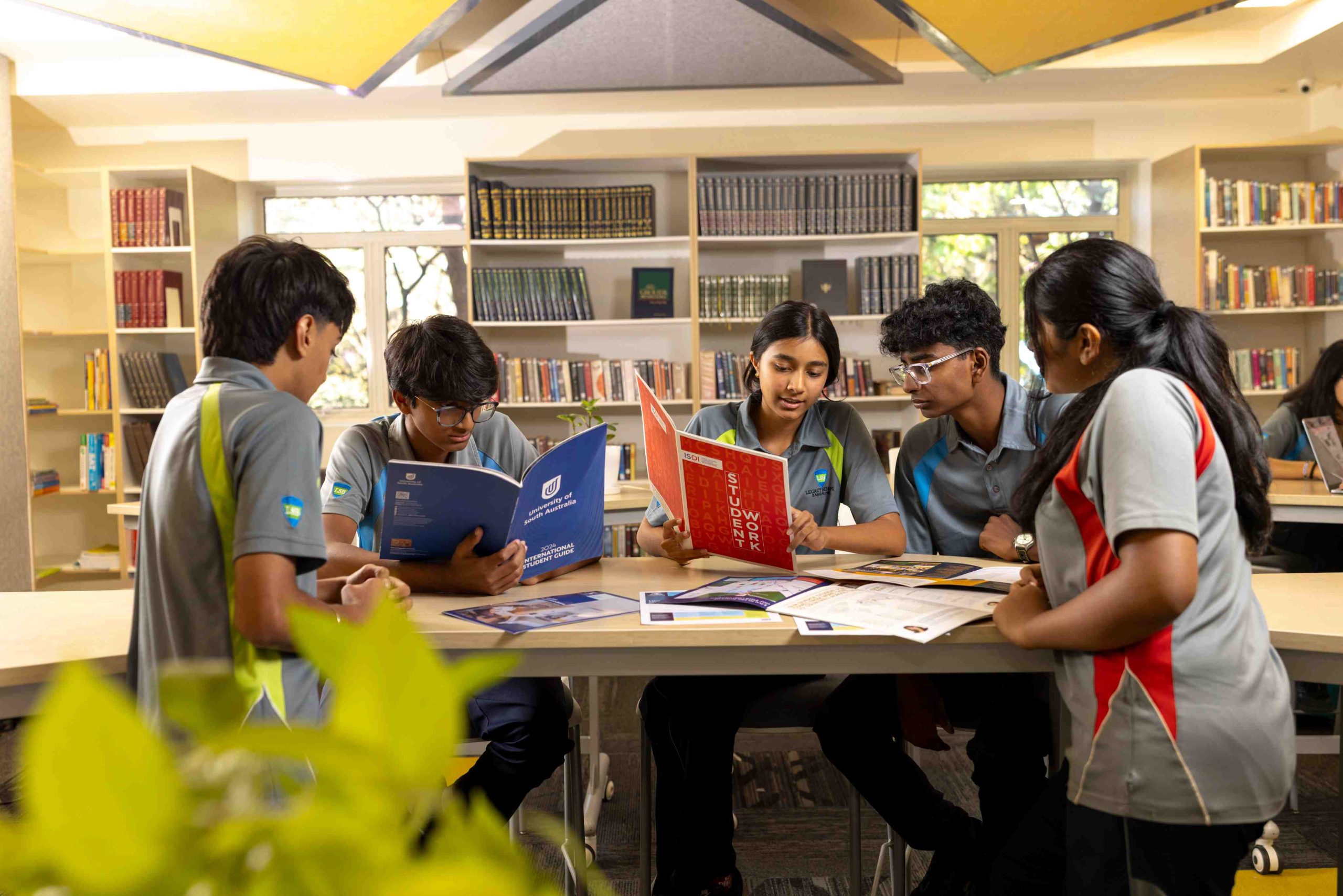
Choosing a programme for Grades 11 and 12 is an important decision for students and families. When comparing IB vs CIE, it is essential to understand how each pathway approaches learning, subject specialisation, assessment and university preparation. Both the International Baccalaureate (IB) Diploma Programme and Cambridge International A Levels offer academically rigorous pathways, but they provide different opportunities for students to explore their interests, develop essential skills and prepare for life beyond school.
At Legacy School Bangalore, students can choose between these two pathways, allowing them to build on their individual strengths, academic interests and aspirations as they prepare for higher education and an evolving world.
Understanding the CIE Curriculum: From IGCSE to A Levels
The Cambridge International pathway has its roots in the British education tradition, with an emphasis on subject knowledge, academic progression and independent thinking. Through its earlier stages, students develop the knowledge, skills and competencies that prepare them for increasingly specialised learning.
At the International General Certificate of Secondary Education (IGCSE) level, students explore individual subjects in greater depth while developing analytical abilities and subject-specific knowledge. For many students, IGCSE provides a strong foundation for progressing to either Cambridge International A Levels or the IB Diploma Programme.
What Makes Cambridge International A Levels Different?
Cambridge International A Levels allow students to focus on a smaller number of subjects, typically three or four. This structure gives them the opportunity to explore their chosen disciplines in considerable depth, making it particularly appealing to students with clear academic interests or aspirations in specific fields.
A Levels are demanding courses that require sustained effort, strong subject knowledge and the ability to engage with complex ideas. Assessment is primarily examination-based, although methods can vary by subject.
For students who enjoy concentrating on particular disciplines, the CIE curriculum offers an opportunity to develop specialised knowledge and build a strong academic foundation for university study. At Legacy, this pathway allows students to dedicate more time to subjects aligned with their interests and future goals.
Understanding the IB Curriculum: A Broader Approach to Learning
The IB Diploma Programme takes a broader approach to education. Students study six subjects across different areas of learning, alongside three core components: the Extended Essay (EE), Theory of Knowledge (TOK), and Creativity, Activity, Service (CAS).
Together, these components encourage students to engage with diverse disciplines, reflect on how knowledge is developed and applied, and consider their responsibilities as learners and members of a wider community.
Beyond Subject Knowledge: Skills, Concepts and Application
One of the key distinctions in the IB vs CIE comparison is the way the IB curriculum integrates subject learning with research, reflection and interdisciplinary thinking.
The IB encourages students to do more than understand and recall information. They are expected to interpret evidence, evaluate perspectives, make connections between concepts and apply their learning to unfamiliar situations.
Assessment varies by subject and can include internally assessed work and external examinations. This allows students to demonstrate their understanding through different formats, depending on the requirements of their chosen subjects.
At Legacy School Bangalore, the IB Diploma Programme gives students opportunities to connect classroom learning with real-world questions, develop independent perspectives and strengthen their ability to communicate and justify their thinking. These experiences support the development of reflective, resourceful and confident learners.
Research and Independent Learning in the IB Diploma
Research is another defining feature of the IB experience. Through the Extended Essay, students undertake an independent research project and produce an academic paper of up to 4,000 words. They also complete subject-based internal assessments that vary according to their chosen disciplines.
These experiences help students formulate research questions, evaluate sources, construct arguments, interpret evidence and manage substantial pieces of work independently. Such skills are valuable preparation for university, where students are expected to take greater ownership of their learning.
The IB’s emphasis on research and reflection also encourages curiosity, critical thinking and intellectual independence — qualities that extend well beyond the classroom.
IB vs CIE: Understanding the Key Differences
When comparing the IB curriculum and CIE curriculum, the most important consideration is not which programme is universally better, but which approach aligns with a student’s interests, strengths and preferred way of learning.
Subject selection and specialisation: Cambridge International A Levels allow students to focus on a smaller number of subjects, offering greater scope for specialisation. The IB Diploma Programme requires students to study six subjects across different areas, encouraging breadth alongside depth.
Learning approach: The CIE curriculum emphasises subject knowledge and a detailed understanding of selected disciplines. The IB combines subject-specific learning with interdisciplinary connections, critical reflection and the application of knowledge.
Assessment methods: Cambridge International A Levels are primarily examination-based, although assessment arrangements vary by subject. The IB combines external examinations with internal assessments and other subject-specific assessment methods, giving students different ways to demonstrate their learning.
Research and core components: Both pathways develop analytical and research skills. However, the IB Diploma Programme includes a structured core through the Extended Essay, Theory of Knowledge and Creativity, Activity, Service, providing additional opportunities for independent inquiry, reflection and engagement beyond academic subjects.
At Legacy, these differences allow students to pursue distinct academic experiences within the same school community, with each pathway offering valuable opportunities for growth and preparation for higher education.
IB vs CIE in a Changing World
As artificial intelligence reshapes industries and the nature of work continues to evolve, the skills students need are becoming increasingly important. Deep subject knowledge remains essential, but so does the ability to reason, evaluate information, communicate clearly, conduct research and apply learning in unfamiliar situations.
The CIE curriculum offers students the opportunity to build considerable depth in their chosen disciplines. The IB curriculum provides a structured opportunity to combine subject knowledge with interdisciplinary thinking, independent research and reflection.
Both pathways can nurture important capabilities for the future when supported by meaningful learning experiences, strong teaching and a commitment to continuous growth.
At Legacy School Bangalore, learning extends beyond the completion of a syllabus. Whether students choose A Levels or the IB Diploma Programme, the aim is to help them develop the knowledge, confidence and capabilities to approach new challenges thoughtfully and pursue their ambitions with purpose.
Choosing an International Curriculum in Bangalore
For families exploring an international curriculum in Bangalore, choosing a school involves more than comparing qualifications. It is equally important to consider the learning environment, subject options, teaching approach and opportunities students have to discover their strengths.
Before deciding between IB and CIE, families should consider their child’s academic interests, preferred learning style and future aspirations. Students who enjoy focusing on a few disciplines may gravitate towards A Levels, while those who appreciate breadth across subjects, independent research and interdisciplinary connections may prefer the IB Diploma Programme.
It is also important to review the subject prerequisites and entry requirements of prospective universities and courses. Speaking with teachers and admissions teams can help families understand the expectations of each pathway and make a more informed decision.
At Legacy School Bangalore, offering both Cambridge International A Levels and the IB Diploma Programme gives students and families the opportunity to explore distinct academic pathways within the same school community. Each programme offers different ways to develop knowledge, pursue interests and prepare for future opportunities.
IB vs CIE: Two Pathways, One Goal
There is no single pathway that is right for every student. Cambridge International Education and the IB Diploma Programme offer two distinct approaches to academic growth, each with its own strengths and opportunities.
The CIE pathway allows students to specialise and explore selected subjects in depth. The IB curriculum combines breadth across disciplines with structured research, reflection and interdisciplinary learning. Both require commitment, intellectual curiosity and sustained effort.
Ultimately, choosing between IB and CIE is about understanding the learner — their interests, ambitions, strengths and preferred approach to learning. With the right guidance and learning environment, either pathway can help students build a strong foundation for university and beyond.
At Legacy School Bangalore, we believe education is not simply about preparing students for their next examination. It is about equipping them to Learn. Reflect. Discover. Evolve. and develop the knowledge, confidence and capabilities to navigate an ever-changing world.